










Our job
 publicaciones propias
The Green Monarchy
The Green Monarchy
Fecha: 11 Abril 2025
Authors: Raúl López Baelo, Toni Timoner
An unprecedented analysis of the role of constitutional monarchies in sustainability and the fight against climate change produced for the Network of Contemporary Monarchy Studies (REMCO).
It analyzes the role of constitutional monarchies as contemporary agents of change in promoting environmental sustainability and the fight against climate change. Through an examination of their historical, constitutional, and operational dimensions, the report highlights the unique capacity of these institutions to act as neutral and morally influential actors, facilitating dialogue around the environmental agenda and fostering social consensus on climate matters.
The document develops a comparative framework structured into four dimensions —official duties, public activism, personal views, and institutional leadership— that allows measuring the level of ecological commitment of monarchies beyond their statements. This approach provides an innovative tool to analyze their real contribution to sustainability.
In addition, the publication incorporates a green performance index that ranks the analyzed monarchies according to their institutional involvement in sustainability, placing the United Kingdom, Japan, and Spain among the top positions.
These institutions carry an implicit conservation mandate, extending their traditional role as guarantors of national continuity to include the protection of the natural environment, alongside political and cultural preservation.
 Read more
The role of monarchies in defending the environment and the green transition

Por qué un centro de datos no es de izquierdas ni de derechas y qué pasa cuando se le trata como si lo fuera
11 Septiembre 2026Luis Quiroga, cofundador de OIKOS y coautor de "El ecologista de derechas", firma una tribuna en Agenda pública donde defiende que un centro de datos no es de izquierdas ni de derechas, y que leer el debate en clave partidista lleva a regular mal.
Read
Por qué un centro de datos no es de izquierdas ni de derechas y qué pasa cuando se le trata como si lo fuera
11 Septiembre 2026Luis Quiroga, cofundador de OIKOS y coautor de "El ecologista de derechas", firma una tribuna en Agenda pública donde defiende que un centro de datos no es de izquierdas ni de derechas, y que leer el debate en clave partidista lleva a regular mal.

La necesidad de una propuesta ambiental de centro derecha
11 Agosto 2026La politóloga Cristina Monge firma tribuna en El País donde se hace eco de la labor de OIKOS como principal centro de pensamiento del centro-derecha español en materia de cambio climático y medio ambiente.
Read
La necesidad de una propuesta ambiental de centro derecha
11 Agosto 2026La politóloga Cristina Monge firma tribuna en El País donde se hace eco de la labor de OIKOS como principal centro de pensamiento del centro-derecha español en materia de cambio climático y medio ambiente.
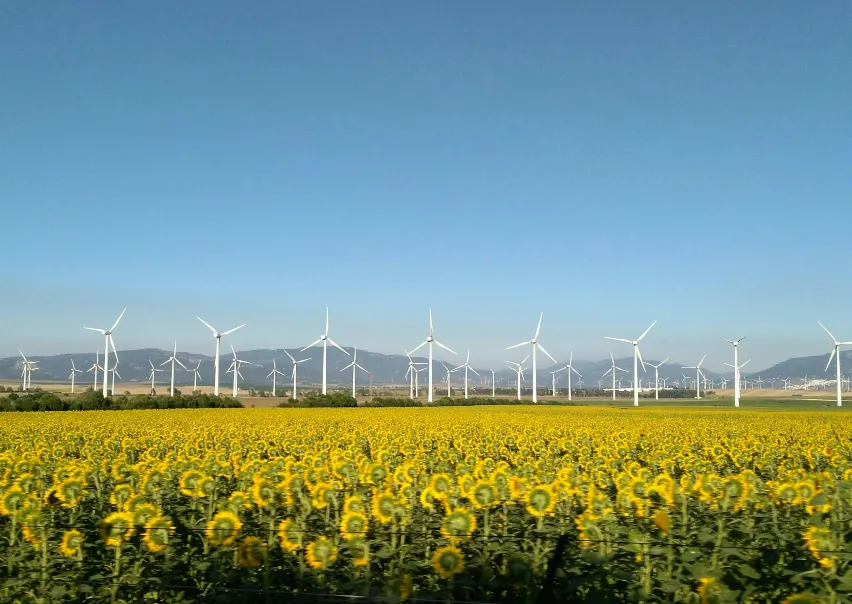
From climate exceptionalism to system policy
24 Julio 2026Luis Quiroga and Toni Timoner write for the Cuadernos de Energía of the Spanish Energy Club on the implausibility of the IPCC's SSP5-8.5 scenario, recently removed from the future analytical framework, and its implications for energy policy.
Read
From climate exceptionalism to system policy
24 Julio 2026Luis Quiroga and Toni Timoner write for the Cuadernos de Energía of the Spanish Energy Club on the implausibility of the IPCC's SSP5-8.5 scenario, recently removed from the future analytical framework, and its implications for energy policy.
